
Skip to content

Transformational speaker and serial entrepreneur

Don’t just fill the room. Make it come alive.

Arja Hendrikx is a transformational speaker, entrepreneur and founder of three businesses, exploring what makes us feel truly alive in our leadership, our relationships and our connection to something greater.

Territory
Aliveness in an age of extraordinary success
Formats
Keynote, panel, workshop, ceremony
AlivenessIntimacyTaboo and the unspokenBeyond the mindEfficiency is getting cheap. Aliveness is not.Three businesses builtShe makes the room feel itAlivenessIntimacyTaboo and the unspokenBeyond the mindEfficiency is getting cheap. Aliveness is not.Three businesses builtShe makes the room feel it

The problem

We have never been better at success. So why do so many of us feel less alive?

We know how to build, lead, scale, optimise, perform and achieve. But somewhere between the next meeting, the next milestone and the next thing that needs our attention, something quieter starts disappearing. Our intimacy. Our desire. Our sense of mystery. Our connection to ourselves, and to something greater.

  • You finally have the beautiful home. You walk through it looking at your phone.
  • You finally have the partner you once longed for. Most of your conversations are logistics.
  • You finally have freedom. Your calendar is full.
  • You finally built the company. You are exhausted maintaining it.
  • You have more information than any generation in history, and somehow life feels less mysterious.

Nothing is wrong. That is the confusing part.“You are not burned out. You are underfed.”

To be clear, this is not an argument that burnout is imaginary. It is very real, and rest is not optional. But there is a particular kind of high performer who reads every sort of depletion as a need for more rest, takes the holiday, comes back, and feels precisely the same.

For them the answer is not less work. It is more life. More intimacy, more play, more sensation, more meaning, more mystery.

That is the room Arja speaks into. People with real achievements who are quietly tired of performing them, and who suspect there is more available than the version they have been living.

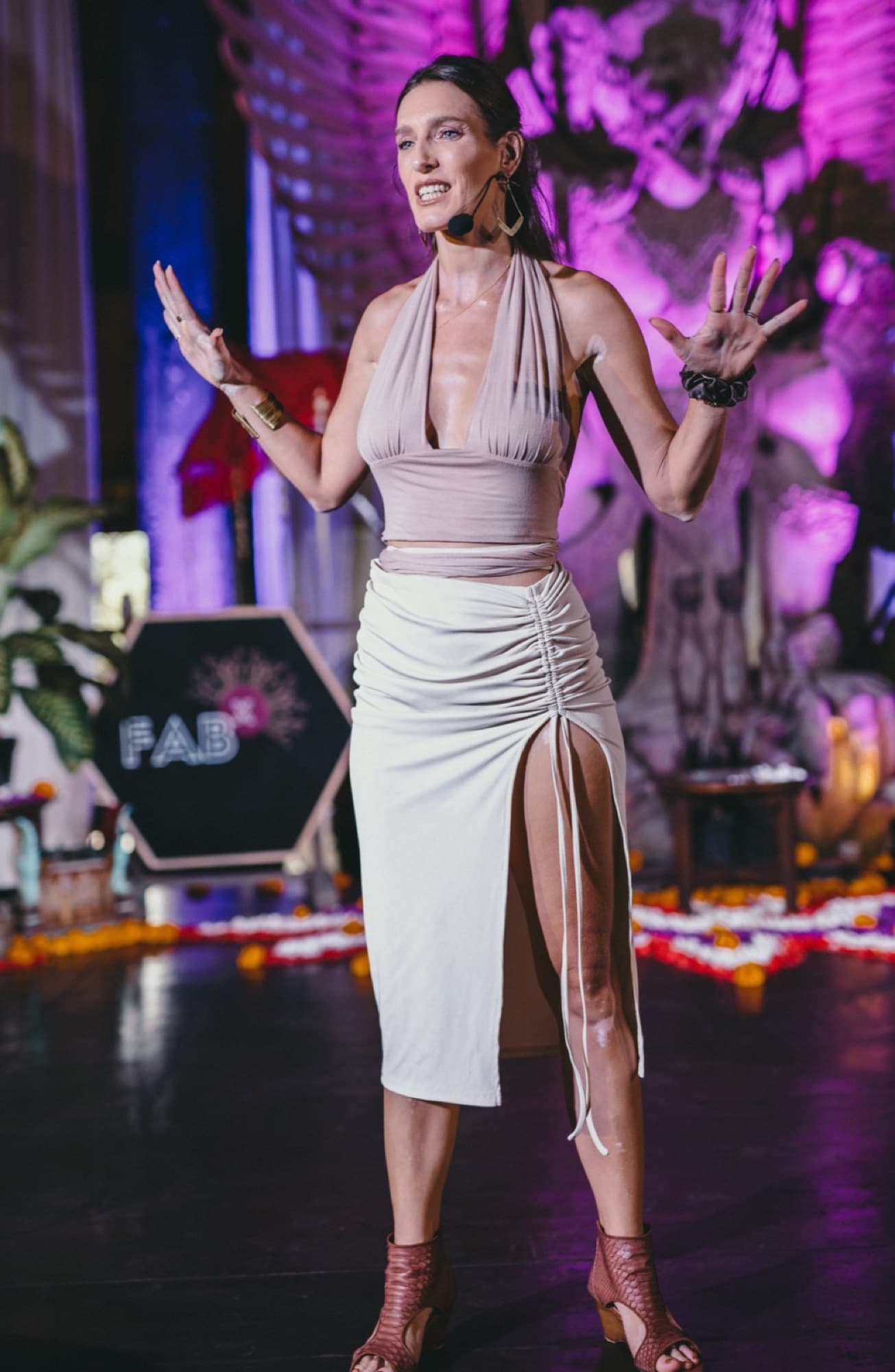
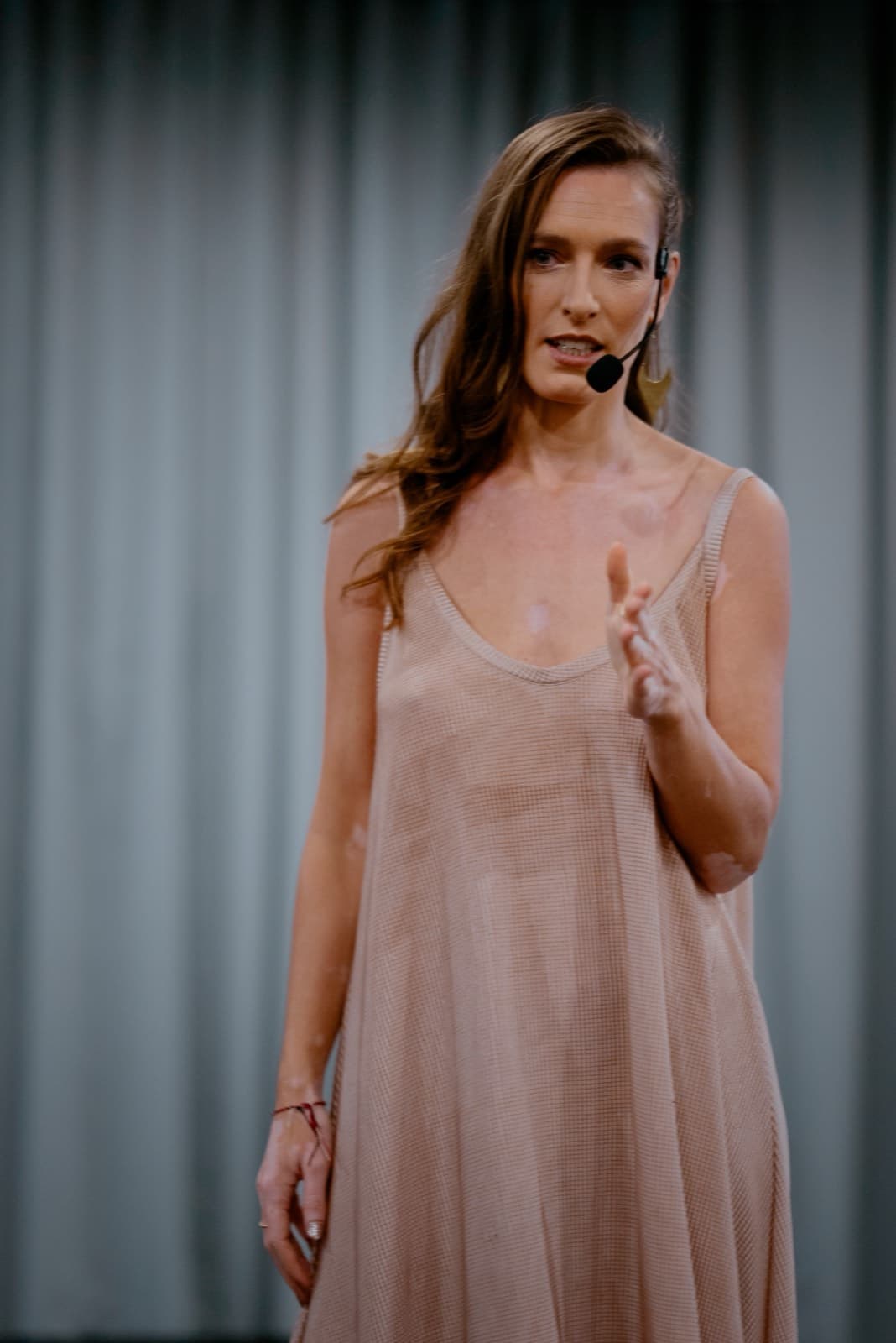
Arja Hendrikx close up in a beige slip dress, headset microphone on, one hand raised mid sentence

Formats

Four ways to put Arja in front of your people.

Same territory every time. What changes is how much of it your audience gets to experience rather than simply hear about.

  • Arja Hendrikx speaking with a microphone in front of a large seated crowd in a hall

    Keynote

    45 to 60 minutes

    The big room. Provocative storytelling, audience participation, embodied moments, and ideas people are still arguing about at dinner.

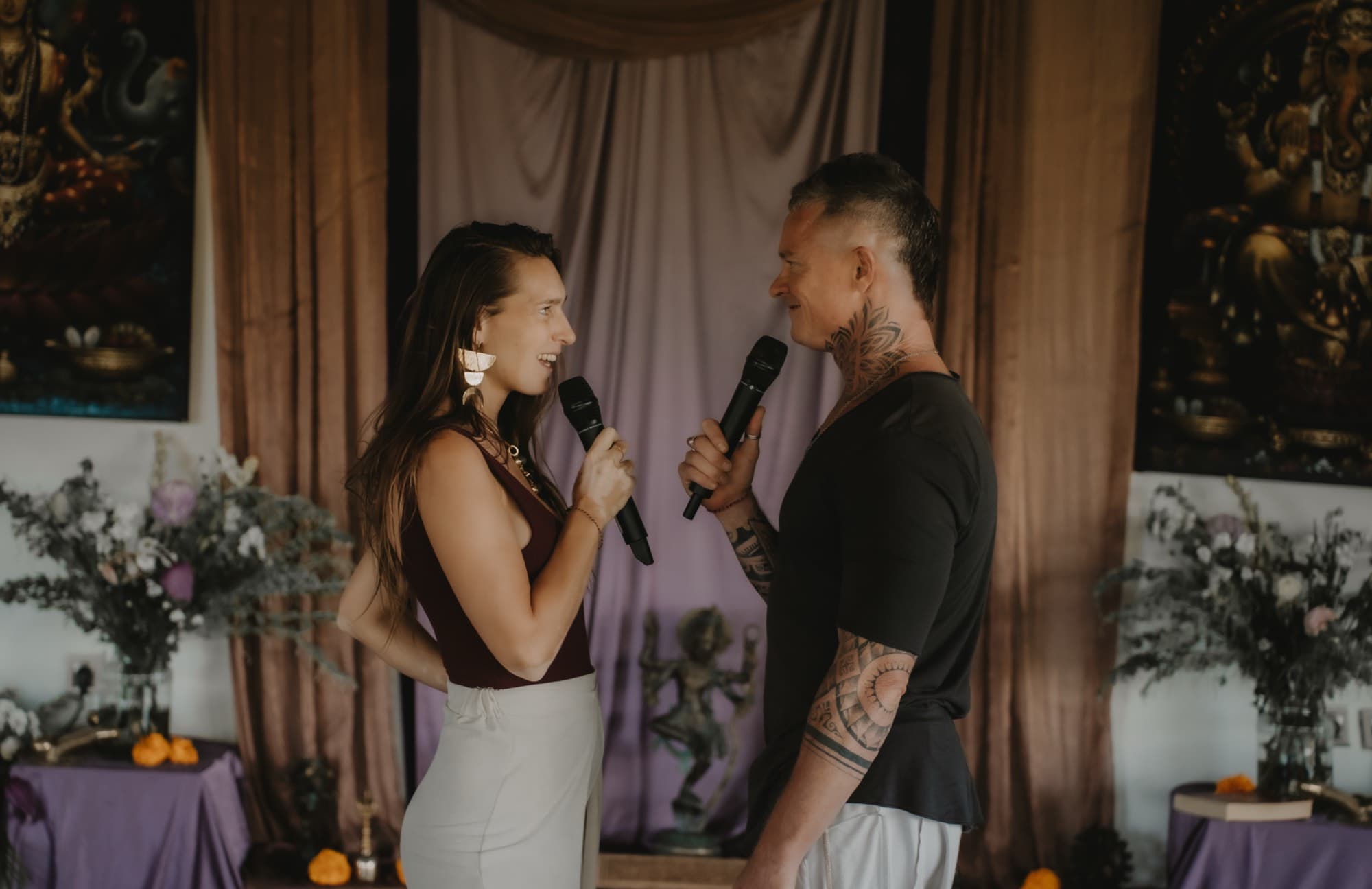
  • Arja Hendrikx on stage in conversation with another panellist, both holding microphones

    Panel

    As programmed

    Where her willingness to say the thing everybody else dances around becomes the asset. She is not there to give polished conference answers. She is there to make the conversation interesting.

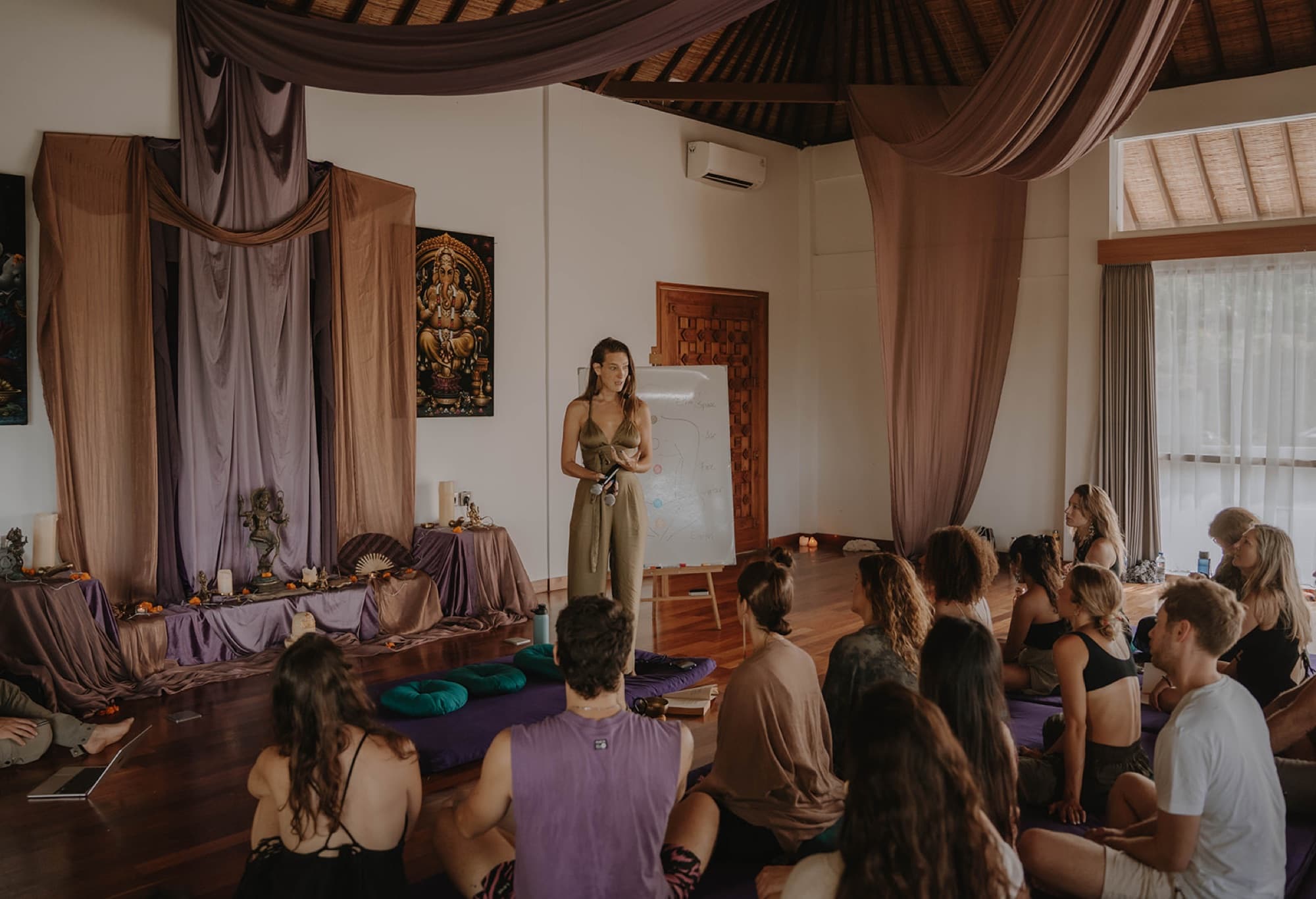
  • Arja Hendrikx teaching a seated group in a temple room, a diagram drawn on the whiteboard behind her

    Workshop

    90 minutes to half a day

    Where people stop hearing the idea and start experiencing it. More participation, more practice, more interaction, more actual human connection.

  • A crowd standing with their hands raised in the light at the close of an event

    Ceremony

    20 to 40 minutes

    The one that turns an event into a moment people remember. Your audience has had two days of information, panels, pitches, networking and slides. This is not another 45 minutes of content. It is an experience that helps them integrate what they have been through and leave feeling connected, moved and complete.

Bring Arja to your stage

Tell her the date and the room. She will tell you straight away if it is a yes.

Speaking topics

Four territories she can take your room into.

They overlap, because people do. Most rooms get one as the spine and the others woven through, shaped around the conversation your audience actually needs.

  • 01Territory

    Aliveness

    You are not burned out. You are underfed.

    The territory underneath everything else. What happens to a human being who gets very good at functioning inside a life they no longer have space to actually experience, and what it takes to get the magic back. In the age of AI, efficiency will become cheap. Aliveness will not.

    What it covers

    • Success, overdrive and quiet autopilot
    • Feeling more, and when exactly we stopped
    • Magic, mystery and desire as working forces
    • The life you built against your capacity to experience it
  • 02Territory

    Intimacy

    Success can build a beautiful life. It cannot make you feel close inside it.

    The person who once lit up your whole body becomes the person you discuss logistics with. Nothing dramatic happened. You were both just busy building something good. This is also where the old line still holds: how you show up in private is exactly how you show up at the top of the table.

    What it covers

    • Desire, and where it quietly goes
    • The intimacy cost of ambition
    • Successful couples who became excellent teammates
    • Vulnerability and real connection at work
  • 03Territory

    Taboo and the unspoken

    Most rooms are too polite to transform.

    Confidence is not a motivational topic here. Confidence becomes the capacity to say what needs to be said. And if you can learn to speak confidently about the things society taught you to hide, imagine how differently you will lead everywhere else.

    What it covers

    • Speaking the unspeakable, on stage and off
    • Shame, expression and visibility
    • Building businesses in taboo markets
    • Standing behind ideas other people do not understand yet
  • 04Territory

    Beyond the mind

    We have become brilliant at thinking. But that is only one way of knowing.

    We have trained leaders to listen to data, strategy, experts, markets and algorithms. Have we trained them to listen to themselves? And when machines can think alongside us, what becomes of the intelligence that cannot be reduced to thinking? This is the one that tailors naturally to an AI programme.

    What it covers

    • Intuition and embodied intelligence
    • Synchronicity, energy and awe
    • Decision making beyond logic
    • Meaning and mystery in a heavily measured world

Built for your room

Your event isn’t off the shelf. Neither is the talk.

Arja works with organisers to shape each appearance around the conversation their audience actually needs, drawing from her work across aliveness, intimacy, taboo, human connection and the intelligence beyond the thinking mind.

No two rooms are the same. Neither are Arja’s keynotes.

What audiences leave with

  • A radically different understanding of what aliveness actually is
  • Recognition of exactly where they have been running on autopilot
  • A practical way to access more than the thinking mind
  • An immediate experience of becoming more present, connected and alive
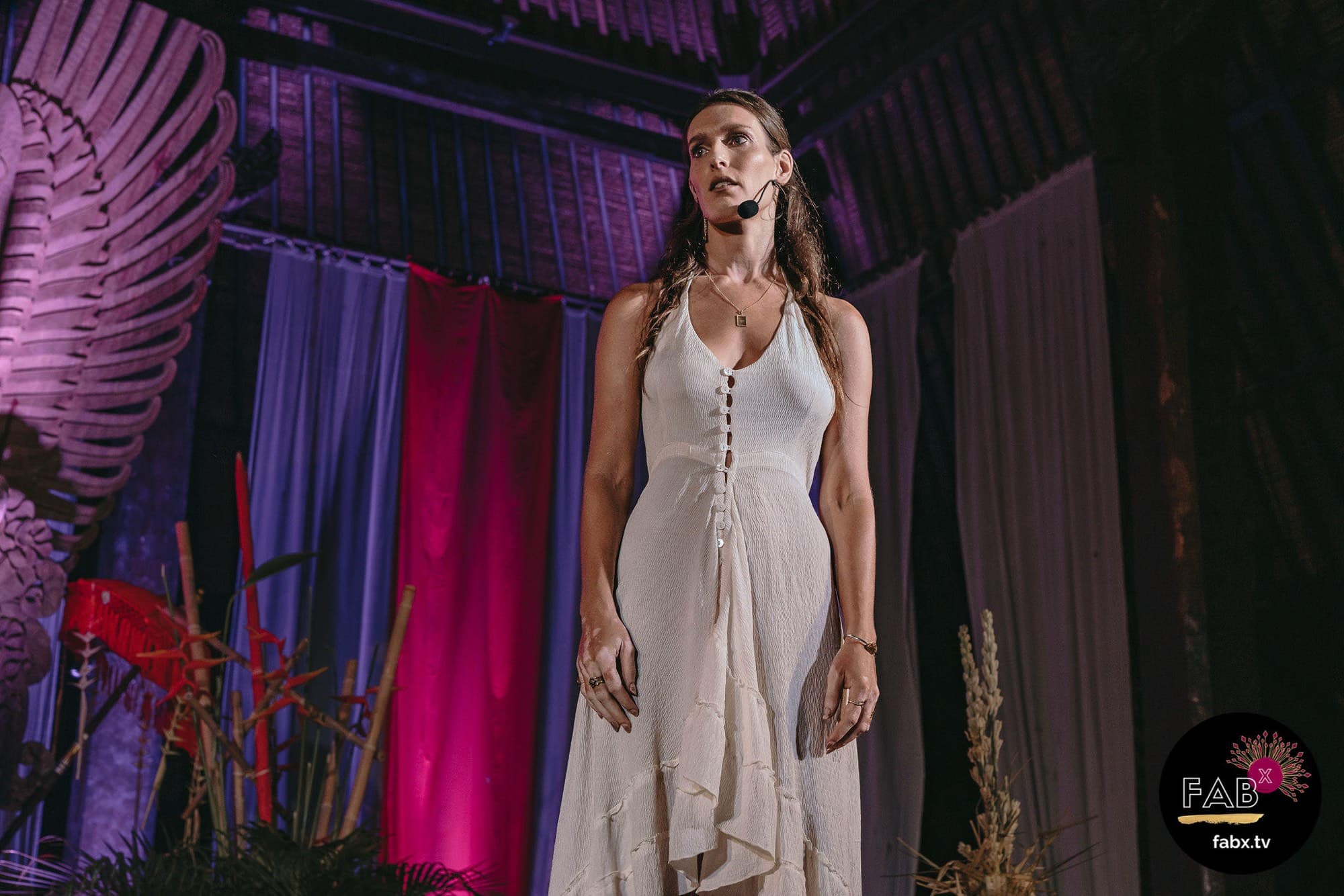
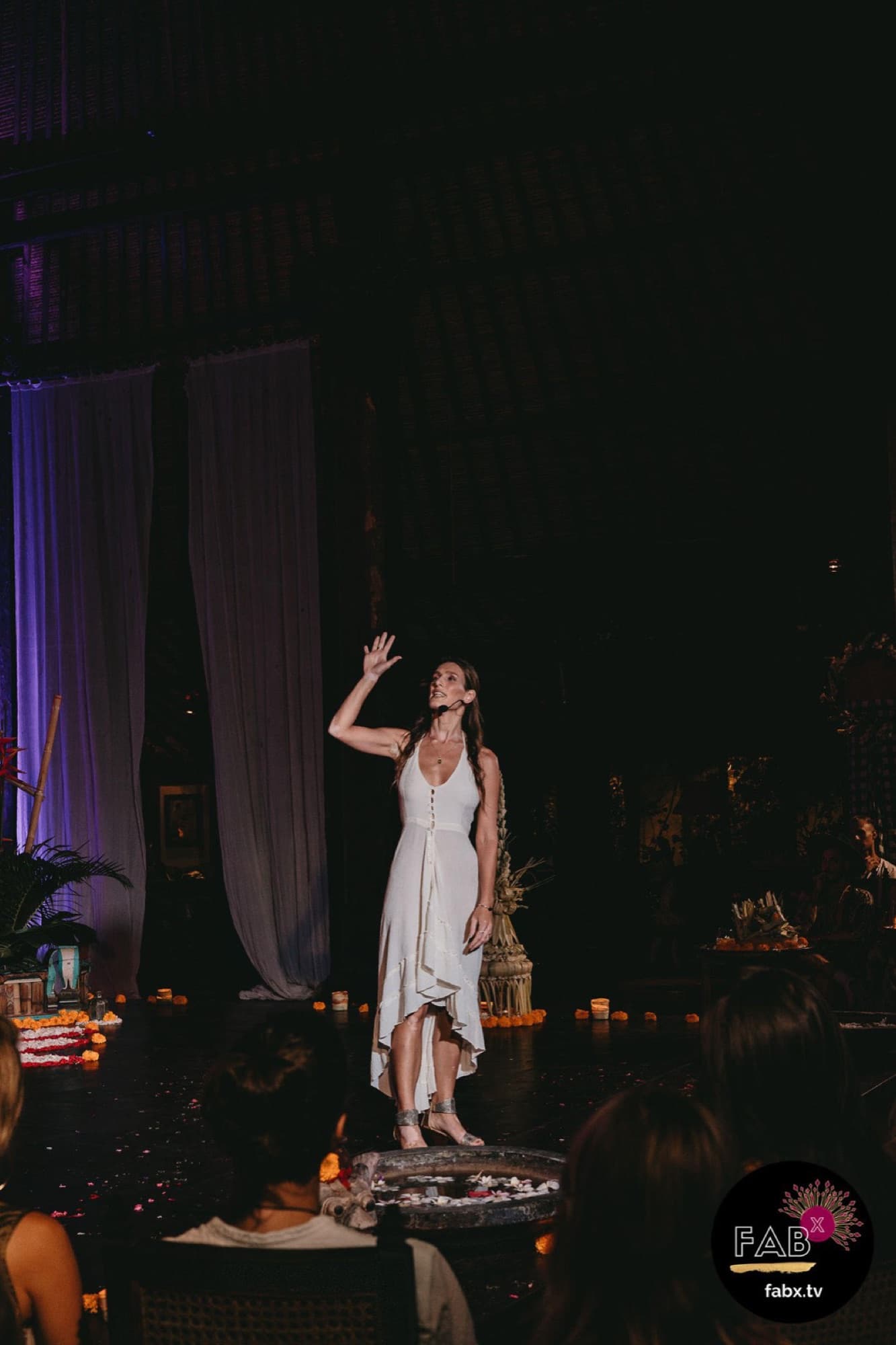
Arja Hendrikx in a white dress standing on a decorated stage hung with deep coloured fabric

Why Arja

She built three thriving businesses in an industry most people still whisper about.

3

Businesses built

Built and scaled in an industry most people still whisper about, which is roughly why nothing on a stage rattles her.

The unusual laboratory

Years spent in the places where people’s masks come off.

Intimacy, desire, shame, relationships, the body, transformation, the sacred. Not the polite version of those conversations, the real one, with people who had run out of reasons to perform.

That turned out to be an unusually good laboratory for understanding what shuts a human being down, and what makes one come alive.

She now brings what those years taught her into leadership rooms, entrepreneurial stages and organisations. You do not have to share a single one of her beliefs to use what she found.

  • 01

    Arja Hendrikx

    The personal brand and the speaking work

    Keynotes, panels, workshops and ceremonies on aliveness, intimacy, taboo and the intelligence beyond the thinking mind.

  • 02

    Temple of Radiance

    Co-founded and scaled

    A sold-out teaching business, in person and online, that has guided hundreds of people through transformation. Where the ideas from the stage become something you actually practise.

  • 03

    Temple Village

    Visionary

    Bali's most conscious visionary village, and the physical home this work has been pointing at for years.

Room proof

Don’t take our word for it. Ask the room.

The question worth asking an organiser is not whether the speaker was good. It is what the audience did afterwards.

Arja Hendrikx in red among a standing crowd, mouth open mid shout, people moving around her
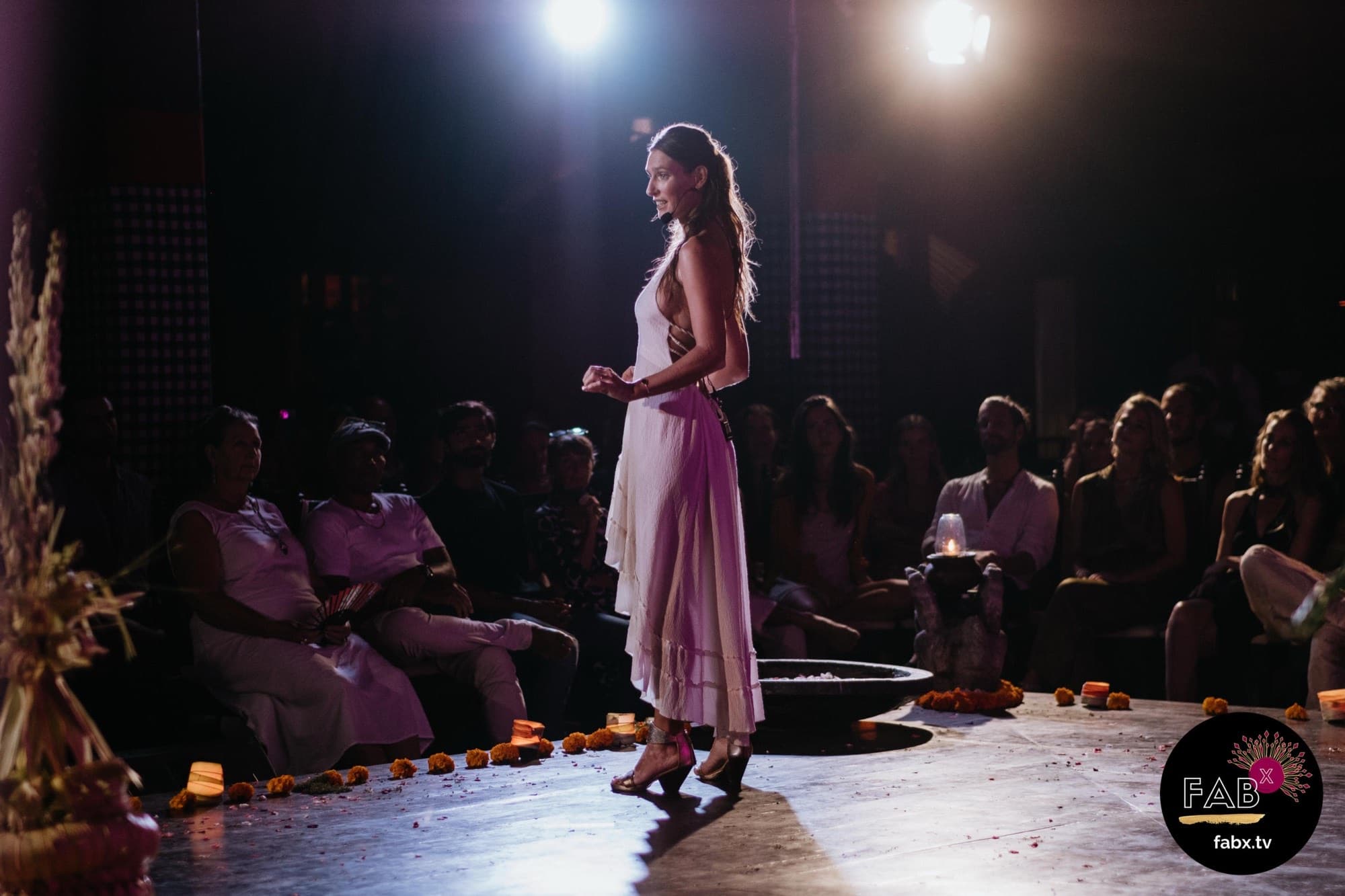
Arja Hendrikx in a white dress with one arm raised on a dark theatrical stage
Arja Hendrikx mid gesture with both hands shaping the air, soft curtain behind her
Wide view of a room with Arja Hendrikx in a red dress on a low stage and the audience seated along one side
Faces in the audience listening closely, Arja Hendrikx blurred in red in the foreground
  • I have never seen our audience participate like that. We have run this conference for years and that has simply never happened.

    Placeholder quote

    Conference organiser, replace with a real name

  • People were still talking about her session at dinner. Not politely. Actually arguing about it, in the best way.

    Placeholder quote

    Event producer, replace with a real name

  • She completely changed the energy of the event. Everything after her slot landed differently, and our closing numbers showed it.

    Placeholder quote

    Programme lead, replace with a real name

  • Our attendees asked us to bring her back before the event had even finished. The room was on the edge of their seats.

    Placeholder quote

    Summit host, replace with a real name

On stage

What your room still feels like an hour after she stops talking.

The framework underneath

We’re trying to experience life through one-fifth of ourselves.

We have trained one part of ourselves to an extraordinary standard and left the other four more or less untouched. Then we wonder why a life that looks complete on paper feels thin to live in.

Aliveness is not a mood. It is what happens when more than one of these is switched on at the same time.

Arja Hendrikx teaching a seated group, a five part diagram drawn on the whiteboard behind her
  • 01

    Mental

    Thought, story, belief. The one we have trained relentlessly, and the only one most rooms ever use.

  • 02

    Physical

    Sensation, breath, appetite. The body you are actually sitting in while you read this.

  • 03

    Emotional

    What you feel, what you let yourself feel, and everything you have been filing under fine.

  • 04

    Energetic

    Presence. The reason a room changes temperature when certain people walk into it.

  • 05

    Spiritual

    Meaning, awe, mystery. The quiet suspicion that something larger is going on here.

On a stage, this is the big idea. Temple of Radiance is where people go when they want to actually learn it.

A question, while you are here

Are you living fully, or functioning beautifully?

If you have read this far and something has been quietly landing, it is probably not because you are looking for a speaker.

You are not falling apart. You are functioning exceptionally well. That is exactly why nobody has noticed what is missing, including, most of the time, you.

The people who need this work least urgently are usually the ones it changes most. Nothing is wrong. There is simply a great deal more available.

How alive are you, really?

Take the four minute reading

Thirteen questions. Nobody sees your answers but you.

Arja Hendrikx with arms open wide under magenta stage light, wearing a beige two piece

About Arja

She was the good girl who performed. Then she stopped.

For years Arja lived with body image insecurity, and the strategy she used to survive it was the one plenty of high performers recognise: perform, please, keep everybody comfortable, and never be the problem. It worked, in the way that costs you something every single day.

She did not study her way out of it. She lived her way out. Months inside a community in Ecuador before any formal training, learning devotion and daily ritual in her body rather than from a syllabus. Then a breakthrough in Thailand where the shame she had carried for a decade turned, quite suddenly, into a source of power.

What followed was unglamorous and real. Teaching workshops under other schools’ brands. Growing by word of mouth rather than strategy, because the rooms kept telling other rooms. Then COVID closed every physical door and forced the whole thing online, which is the moment it stopped being a hobby and became a business.

She co-founded Temple of Radiance and turned lived experience into something with structure: curriculum, team, revenue, and hundreds of people guided through transformation.

The tradition she trained in was Tantra, and it matters less as a label than as a laboratory. She spent those years at the edges of the conversations most people avoid: intimacy, desire, the body, relationships, the sacred. If you want to understand what makes a human being shut down and what makes one come alive, there are few better places to be standing.

So she is not on stage to teach you a tradition. She is there with what it taught her, translated for people who have built something significant and would quite like to feel it.

The shift, in her own words

From a Good Girl Performer sourcing love and safety from other people’s approval, to sourcing confidence from her own truth and presence.

She still names the shadows out loud on stage: the people-pleasing, the performing instead of being fully seen, the conflict she used to walk around rather than through. Not as weaknesses to hide, as the exact reason she can see them in a room of five hundred people within about ninety seconds. You cannot fake that kind of empathy, and audiences can tell.

From sacred practice to visionary strategy. From temple to team. From breath to boardroom.

And the question underneath all of it, the one she will put to your room in the first five minutes: what if success was never supposed to cost you your aliveness?

What producers actually ask

The bit where she answers honestly.

If yours is not here, just ask. She would rather have the awkward question early than a polite booking that was never right for either of us.

Bring Arja to your stage
  • A standard keynote gives your audience information. They nod, they clap, they drift toward the coffee, and by Thursday it is gone. Arja is not there to add another framework to the pile. She works with the actual bodies in the seats: the breath, the attention, the thing each person walked in privately carrying. There is storytelling, there is participation, and there is usually a moment the whole room does together. What organisers report back is not that the content was interesting. It is that the room changed.

  • Yes, and it is completely fair to want that answered before anything else. Arja has spoken to boardrooms, founder communities, summits and leadership programmes. Nothing is explicit. Nobody is put on the spot in their seat. There is no undressing, no partner exercise, no audience member dragged up on stage. Participation is always invitational and anybody can simply sit and watch. She talks about aliveness, intimacy, connection and meaning in language a mainstream leadership audience can use on Monday morning, and you do not have to share any of her beliefs to get the value. If your legal or comms team wants the outline in advance, she will send it.

  • It is the closing slot, done properly. By the end of day two your audience has absorbed information, panels, pitches, networking and a great many slides, and they are full. A ceremony is not another 45 minutes of content on top of that. It is a designed experience, usually 20 to 40 minutes, that helps people integrate what they have been through, connect with the people around them, and leave feeling moved and complete rather than merely finished. It is the part they describe to their partner that night, and it is the reason they remember your event rather than the one before it. If the format is new to you, ask and she will walk you through exactly what happens minute by minute.

  • Always. Your event is not off the shelf, so neither is the talk. She will ask what your theme is, what the audience is really dealing with this year, what the speaker before her is covering, and what you would love people saying on the way out. Then she draws from her work across aliveness, intimacy, taboo and the intelligence beyond the thinking mind and builds the version that lands in your room and nobody else's. No two rooms are the same. Neither are her keynotes. Give her your theme and no title at all and she will happily build something new, which is her favourite brief.

  • It is where she trained, not what she sells. Arja spent years working at the edges of the conversations most people avoid: intimacy, desire, the body, relationships, the sacred. That turned out to be an unusually good laboratory for understanding what shuts human beings down and what makes them come alive. What she brings to your stage is the finding, not the tradition. If it serves the room she will name where the work comes from, in about ninety seconds, in a way your most conservative delegate can repeat over dinner without going pink. If your event is better served without the word, say so and she will simply teach the substance.

  • A short call to align on the outcome, a talk title and abstract for your programme, a speaker bio and press photography, and her tech and stage notes in one document. She confirms travel herself, arrives the day before where the schedule allows, and will happily do a soundcheck rather than wing it. If you need her for a promo clip or a podcast in the lead up, ask early and she will usually say yes.

  • Very little, which producers tend to like. A headset or lapel microphone, freedom to walk rather than a lectern, and music playback from the booth for a few short moments if the format allows it. Slides are optional and often better left out. If the room is set cabaret or in the round, tell her and she will design for that instead of fighting it.

  • It is a conversation, not a checkout. The fee depends on format, travel, licensing and where the slot sits in your programme. Send the brief with your budget range and she will be straight with you, quickly, without a discovery call that turns into a sales funnel.

  • A real reply from a real person, usually within a couple of days. If the date and the fit look right you will get a short call to talk it through, then a simple agreement. If it is not a fit you will get a clear no and, where she can, the name of somebody better suited. No sequences, no countdown timers, no nine emails about a cart.

For event producers and programme leads

Bring Arja to your stage.

Put me in front of a room of leaders and I will not give them another framework. I will give them their own attention back, and a very direct conversation about what they have been avoiding.

Bring Arja to your stage

It goes straight to her inbox, already filled in.

Send her this and nothing else

Five lines and she can give you a straight yes, no, or a date that works. No form, no portal, no discovery call that turns into a sales funnel.

  1. 01Event name, dates and city
  2. 02Audience: who they are and roughly how many
  3. 03Format: keynote, panel, workshop or ceremony
  4. 04Slot length and where it sits in the programme
  5. 05Your speaker budget range

Not sure of the date yet? Send it anyway. Check her availability.

Your stage, your room, your theme

Your audience will sit through enough keynotes. Give them one they’ll feel.

Bring Arja Hendrikx to your next conference, leadership summit or event. Send the five lines above. She reads these herself and answers like a human, usually within a couple of days.